Ulun Danu Beratan: Bali's Lake Temple at Bedugul
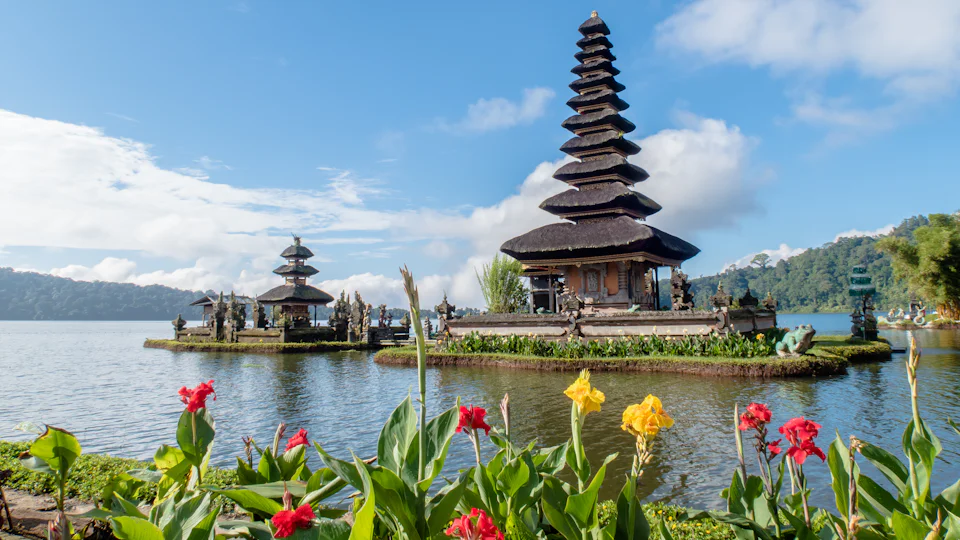
Low cloud drifts across a mountain lake, and out of the mist a tiered pagoda seems to stand on the water itself. This is Pura Ulun Danu Beratan — the temple on Lake Beratan at Bedugul, and the single most photographed shrine in Bali. You have almost certainly seen it before you arrive: it is the temple printed on the 50,000 rupiah banknote, the postcard image of the island's highlands. In person it is quieter and cooler than the brochures suggest, wrapped in the crisp air of the mountains rather than the heat of the south.
What makes it special is not just the view but the setting. At roughly 1,200 metres above sea level, Bedugul feels like a different Bali — misty mornings, highland gardens, strawberry stalls by the road and a lake that mirrors the sky when the wind is still. This guide covers what the temple is and why it matters, how to visit it well, when to come for the famous reflection, and how to fold the Bedugul highlands into a wider trip. If this is your first Balinese temple, start with our guide to Bali temple etiquette.
Ulun Danu Beratan is a water temple, part of the same devotion that runs through the spring temple at Tirta Empul and the sea temple at Tanah Lot. Seen together, the three show how completely the Balinese weave water, land and worship into one landscape.
Why Ulun Danu Beratan Is Bali's Most Photographed Temple
The appeal is immediate and almost cinematic. The best-known shrine is an eleven-tiered meru — a slender, black-thatched pagoda — that stands on a small islet just off the shore. When the lake rises in the wet season, the base disappears under the water and the whole tower appears to float, detached from the land. That single image, doubled by its own reflection, is what draws photographers from across the world.
But the temple is more than one shrine. The grounds are a landscaped lakeside park with several shrine compounds, clipped lawns, flowering trees and a traditional split gate that frames the mountains behind. Families picnic, couples pose, and small boats drift on the lake. It is one of the few major Balinese temples that reads as much as a garden as a place of worship — which is part of why it suits every kind of visitor, from pilgrims to toddlers.
The highland light helps too. Because Bedugul sits in cloud for much of the day, the sun rarely glares as it does on the coast. Soft, diffused light flatters the dark stone and the green water, and the mist that frustrates some visitors is exactly what gives the best photographs their dreamlike mood.
The History and Meaning of the Lake Temple
Pura Ulun Danu Beratan was founded in 1633 by the King of Mengwi, and it is dedicated to Dewi Danu, the goddess of the lakes and of water. The name says as much: ulun danu means roughly "head of the lake," the source from which water flows. For the Balinese this is not symbolism but survival — the lakes of the central highlands feed the rivers and springs that irrigate the rice terraces far below.
That connection is the heart of the place. Bali's farming runs on subak, a cooperative irrigation system in which water is shared from the mountains down to the coast, managed through a network of temples and ritual. Ulun Danu Beratan sits near the top of that chain, honouring the goddess who gives the water in the first place. Offerings are still made here for a good harvest, and the temple remains an active site of worship, not a museum.
The Shrines That Seem to Float
Two structures draw every camera. The larger is the eleven-tiered meru dedicated to Dewi Danu; the number of tiers, always odd, signals the rank of the deity honoured. Beside it stands a smaller shrine on its own islet. In the dry season you may see that both actually rest on narrow bases of land; it is the high water of the rainy months that completes the floating illusion. Knowing this does not spoil it — if anything, it explains why the same temple can look so different from one visit to the next.
Visiting the Temple: Tickets, Hours and the Grounds
Ulun Danu Beratan is open daily, roughly from 7:00 AM to around 7:00 PM, though the lake is at its best long before the crowds and tour buses arrive. The entrance fee for foreign visitors is usually in the region of IDR 75,000–100,000 for adults, with a lower rate for children; as everywhere in Bali, treat any figure online — including this one — as a guide rather than a fixed price, since rates are revised most years.
Inside, the grounds are easy and flat, suitable for all ages, with paths looping between the shrine compounds and the water. Unlike the ritual pools of Tirta Empul, most of what you came to see is viewed from the lakeside lawns rather than entered — the famous meru stands offshore, and you photograph it across the water rather than walking up to it. There are gardens to wander, a café or two, and boats for hire if you want to see the shrines from the lake.
Getting the Reflection Photo
The mirror-smooth reflection everyone wants depends on one thing above all: stillness. Come as close to opening as you can, before the breeze picks up and before the boats start crossing. Early morning gives you glassy water, soft light and far fewer people. Mist is a gamble — it can hide the shrines entirely or wrap them in exactly the mood that makes the shot — but it almost always lifts and shifts, so patience is rewarded. A low angle close to the water doubles the pagoda most cleanly.
What to Wear
Because you view the main shrines from the gardens rather than entering them, the strict sarong rule enforced at ritual temples is lighter here, but this is still a place of worship and modest dress is expected: cover shoulders and knees. Just as important at this altitude is warmth — Bedugul is markedly cooler than the coast, and foggy mornings can feel genuinely cold, so bring a light jacket or sweater you will be glad of at dawn.
Getting There and the Bedugul Highlands
The temple sits at Candikuning, in the Bedugul area of the central highlands, about an hour and a half north of Ubud and roughly two to two and a half hours from the southern beach towns of Kuta, Seminyak and Canggu. The simplest way to come is to hire a driver for the day, which lets you treat the whole highland loop as one outing rather than a single stop; the winding mountain road is scenic but not one to rush on a scooter unless you ride confidently. Timing pairs naturally with our guide to the best time to visit Bali.
Because of the distance, Ulun Danu Beratan works best as an anchor for a full highland day rather than a quick detour. Leaving Ubud early gets you to the lake while it is still calm, with the rest of the Bedugul area open to you afterwards. To see where it fits across a longer trip, our 5–7 day Bali itinerary links it into the north with the temples, terraces and waterfalls.
What Else to See Nearby
Bedugul rewards the drive with far more than one temple. Within a short distance you will find the Bali Botanic Garden, the much-photographed Handara mountain gate, and the Twin Lakes viewpoint over Buyan and Tamblingan. Push a little further west toward Munduk and the land folds into some of the island's finest hidden waterfalls. Candikuning market, with its strawberries, spices and flowers, makes an easy, aromatic stop on the way back down.
Frequently Asked Questions
How much is the entrance fee to Ulun Danu Beratan?
The fee for foreign visitors is typically around IDR 75,000–100,000 for adults, with a reduced rate for children, and it covers access to the lakeside gardens and shrine grounds. Prices are revised most years, so confirm locally and carry small rupiah notes, as card payment is not reliable at the gate.
Where is Ulun Danu Beratan and how far is it from Ubud?
The temple is on Lake Beratan at Candikuning, in the Bedugul highlands of central Bali, at about 1,200 metres elevation. It lies roughly an hour and a half north of Ubud and about two to two and a half hours from the southern beach areas, so most visitors come with a driver for the day.
What are the opening hours?
Ulun Danu Beratan is open daily, roughly from 7:00 AM to about 7:00 PM. Arrive as close to opening as possible: the water is stillest, the light softest and the crowds thinnest in the first hour or two of the day.
Is this the temple on the 50,000 rupiah note?
Yes. The floating meru of Pura Ulun Danu Beratan appears on Indonesia's 50,000 rupiah banknote, which is part of why it is Bali's most recognised temple image. It is a real, working temple dedicated to Dewi Danu, the goddess of the lake.
Final Thoughts
Ulun Danu Beratan earns its fame, but it gives the most to visitors who treat it as more than a photo stop. Come early, dress for the mountain chill, and let the mist do its slow work on the lake while you wander the gardens. Stay long enough to feel why the Balinese built their water goddess a home up here, where the island's rivers begin, and the postcard becomes something you actually understand. One practical tip: reach the gate near opening, around 7:00 AM, walk straight to the water for the reflection before the breeze arrives, and only then explore the rest of the grounds — the calm at that hour is the whole point.
Sources and further reading: Indonesia.travel (official tourism) and UNESCO on the Cultural Landscape of Bali: the Subak System.