Best Time to Visit Bali: Weather, Crowds and Prices
Bali has no single "best" month — it has a dry season of reliable sunshine and a wet season of dramatic storms and near-empty beaches, and the right window depends entirely on what you are optimising for. If you want clear skies for surfing and hiking, the calendar points one way; if you want the lowest hotel rates and space to yourself, it points the other. This guide breaks the year down month by month so you can book with your priorities, not the marketing brochures, in mind.
Bali's two seasons, not four
The island runs on a tropical monsoon pattern, so forget spring, summer, autumn and winter — there is simply a dry season and a wet season. The Indonesian meteorology agency BMKG tracks the monsoon onset each year. The dry season runs from May through September, when humidity eases and rainfall is minimal. The wet season spans October to April, when rain arrives sharply, usually as an intense afternoon downpour rather than an all-day drizzle.
That last point matters, because many travellers assume "wet season" means rain from dawn to dusk. In practice a wet-season day often opens with bright morning sun, takes a heavy two-to-three-hour soaking in the late afternoon, then clears again. What does stay constant year-round is humidity, frequently above 80%, which makes the air feel warmer than the thermometer reads and slows how quickly you cool down outdoors. The dry season feels noticeably fresher simply because the drop in rain allows better air circulation.
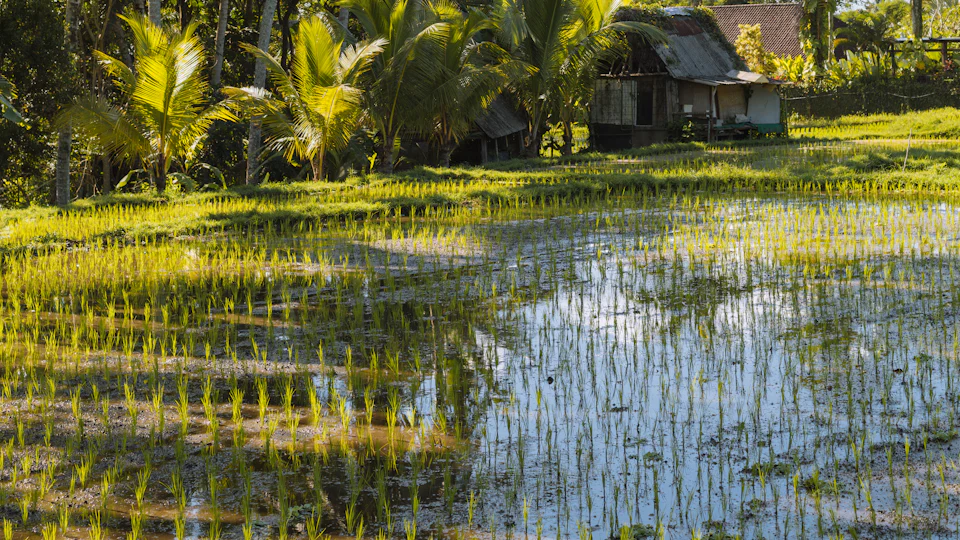
Each season rewards a different itinerary. The dry months bring a fierce UV index — sunscreen is non-negotiable — and firmer trails for climbs like Mount Batur. The wet months turn the landscape a deep, saturated green and send the waterfalls thundering, so the rice terraces around Ubud and cascades such as Sekumpul are at their most photogenic. Neither season is "bad"; they simply suit different trips.
Peak season: July and August
July and August are the absolute peak of arrivals, and for good reason: rainfall averages under 50mm a month, humidity settles around 70%, and outdoor days are as dependable as Bali gets. That reliability comes at a price, though — a mid-range villa in Seminyak that runs about USD 120 per night in the wet season can push USD 200 in August.
Crowds are the real trade-off. Tanah Lot and Kuta Beach feel packed, Canggu's roads gridlock at rush hour, restaurants need reservations booked weeks ahead, and surf instructors are often full days in advance. In return, nothing on your itinerary gets rained out: boat crossings to Nusa Penida run on schedule, snorkelling visibility peaks, and the sea sits at a warm 28°C. That consistency is exactly why families travel now, timed to the European and North American school break — which in turn pushes flights from major hubs up 30–40% against the shoulder months.
Budget travellers should think twice about this window unless their dates are fixed, because cheap low-season flights don't exist here and accommodation swallows any savings. Local transport rises too, with GoJek and Grab surge pricing common at peak hours. If you do come in high season, work around the midday heat: start early, be back at the villa by mid-afternoon, and save the hottest hours for the pool or a spa.
The sweet spot: May, June, September and October
These shoulder months are where value and weather meet. May eases into the dry season as the rain fades; June has peak-season sunshine but slightly thinner crowds; September stays dry while tourist numbers dip; and October flirts with the wet season yet often holds dry until mid-month. For most visitors, this is the smart-money window.
Rates sit well below July — accommodation typically 20–30% cheaper — and you can walk into a popular Canggu café without queuing. The surf is excellent, too: through the dry-season months the swell wraps into the west-coast breaks around Uluwatu and Canggu, with clean offshore conditions in the mornings. The reefs are healthy and the water is clear. You get most of the dry season's upside at a fraction of its cost and congestion.
Booking is more flexible as well, with last-minute deals, more villa inventory and room to negotiate rates. It is also a strong stretch for digital nomads — quieter co-working spaces, stable internet and an active community — and June brings genuine cultural depth, as the annual Bali Arts Festival runs through the month. Check the official Indonesia tourism site for exact dates. If temple culture is what draws you, this is a fine time to explore the sacred temples around Ubud before the peak-season buses arrive.
- May is the best entry point into dry weather, with lower hotel rates than June.
- September offers excellent surf with far fewer tourists than August.
- October is a gamble but often delivers clear skies and steep price drops.
- June coincides with the Bali Arts Festival, adding real cultural value.
Wet season: November to April, a reality check
The wet season is misunderstood more than it is disliked. It is not a washout so much as a different Bali. Rainfall climbs steeply, peaking in December and January with daily downpours — but those bursts are usually short, the sun returns fast, and the whole island turns emerald. Waterfalls like Gitgit and Sekumpul run at full force, and the Tegallalang rice terraces are greener than at any other time of year.
Prices bottom out. Luxury villas in Uluwatu can be found near USD 150 a night, flights are cheap, and hotels sit half-empty. For budget travellers who don't mind an afternoon shower, the maths is compelling: crowds thin out, temples feel almost private, and beaches empty. The whole pace of the island slows.
Surfing simply relocates. The west-monsoon winds turn the famous west-coast breaks onshore and messy, so the action moves to the sheltered east coast — Sanur, Nusa Dua and the reefs beyond. Beginners in particular should favour Sanur's calmer water rather than fighting the heavier, wind-blown swell at Canggu or Echo Beach. The east coast is also the better bet for swimming and kayaking through these months.
Health precautions are minor but real: mosquitoes are more active in the rains and dengue is a genuine risk, so pack repellent and cover up at dusk. The oppressive humidity rewards breathable clothing and steady hydration. It is no accident that this is when cooking classes, yoga retreats and spa days come into their own — the wet season quietly pushes you toward a slower, more restorative trip.
Month-by-month, at a glance
January and February are the wettest months — frequent rain, low prices, thin crowds — with February the peak of the downpours. March eases off, and April begins the transition as the rain retreats and prices tick up. May is the first properly dry month and weather stabilises. June opens peak season and the crowds build. July and August are the driest and busiest. September holds the dry weather while numbers fall away, October brings the first rains, November stays unpredictable, and December mixes holiday crowds with wet-season skies.
Put simply: for the most dependable weather, come June to September; for the lowest prices, come November to March; and for the best balance of the two, aim at May or October. Book early for the peak months, when villas and flights sell out, and you can afford to book late for the wet ones.
Frequently asked questions
Is Bali too hot in July?
No. Temperatures average around 30°C but with lower humidity, so it feels warm rather than oppressive, and the near-total lack of rain makes it comfortable for hiking, diving and long days out. Most visitors find July very pleasant.
Can I visit Bali in December?
Yes, but expect rain and holiday crowds. It is peak festive season, so prices are elevated and the weather is unpredictable. Plan a few indoor backups — a cooking class, a spa day, a museum — and you can still have an excellent trip alongside the festive atmosphere.
Are hotels cheaper in the wet season?
Considerably. Room rates typically fall 20–40%, luxury villas drop the most, and flights are lower too. If you can accept the odd afternoon shower, the wet season is comfortably the best value of the year.
What is the best month for surfing?
For the classic west-coast breaks around Uluwatu and Canggu, the dry season from around May to September is prime, with September a favourite for its swell-and-space combination. During the wet season the east coast around Sanur works better. Beginners should start in May on the calmer, cleaner days.
Conclusion
The best time to visit Bali comes down to your goals: peak season buys reliability at a premium, the wet season buys value in exchange for flexibility, and the shoulder months give you most of the upside of both. Match the month to what matters most for your trip and book with that in mind.
Final tip: for the best mix of dry weather and reasonable prices, target May or September — and if crowds are your dealbreaker, avoid July and August.