Tirta Empul & the Water Temples Around Ubud
The cool spray of holy water hits your skin as you kneel in the purification pool at Tirta Empul. This is not an attraction built for photos alone — it is a working Hindu temple where Balinese come to cleanse their spirits, fed by a spring that has run for over a thousand years. Many visitors underestimate the weight of the place and arrive in bright swimwear expecting a spa. The reality is more demanding and more rewarding, and understanding the ritual before you come changes everything. You are not just sightseeing; you are stepping into a living tradition. If this is your first Balinese temple, start with our guide to Bali temple etiquette.
The landscape around Ubud is dotted with water temples, and they are far more than decorative. They are part of subak, the cooperative irrigation network that shares water across the rice terraces — a system recognised by UNESCO as a World Heritage cultural landscape. Each temple has a role: some honour Dewi Danu, the goddess of the lakes and water, while others manage the flow for particular villages. Tirta Empul is the most famous, but it is not the only one, and exploring these sites shows how closely religion and farming are woven together in Bali. This guide covers the essentials of visiting Tirta Empul and its neighbouring spring temples.
For the temples in Ubud town itself — walkable in a single morning — see our guide to the temples of Ubud.
The Spiritual Significance of Tirta Empul
Tirta Empul means roughly "holy water spring," and the temple dates back to 962 CE. Balinese legend ties the spring to the god Indra, said to have pierced the earth here to release a source of sacred, life-giving water; people have drawn on it for purification ever since. The main reason to visit is that purification ritual — melukat — in which the water is believed to wash away negative energy. It asks for mental and physical preparation, not a quick dip.
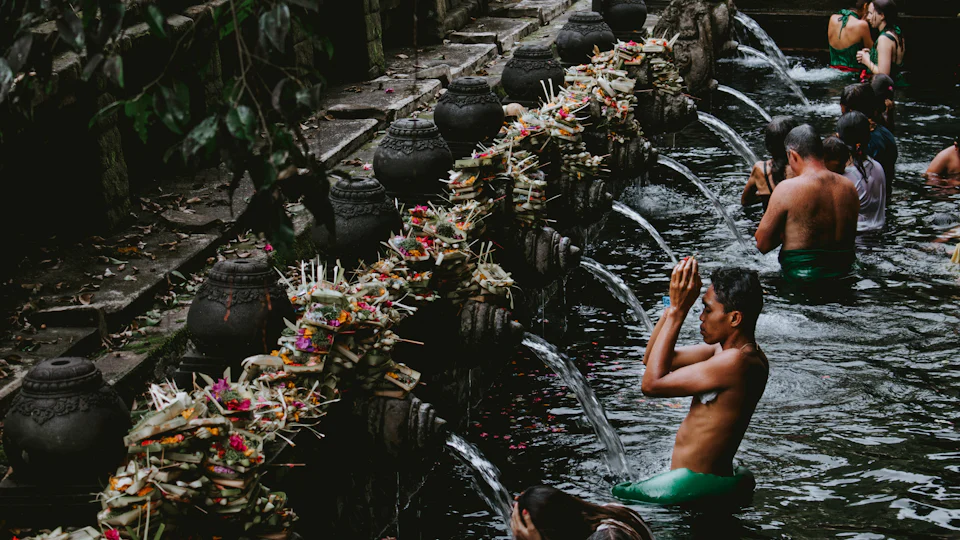
The complex is divided into sections. The outer area is a gathering place where you can watch daily offerings. The inner sanctum is reserved for worshippers with a pilgrimage permit. Most visitors use the purification pools in the middle section, where spring water runs through stone channels into a line of bathing pools, each with its own purpose — general cleansing at some spouts, specific intentions at others.
Understanding the ritual matters before you enter the water. You wear a sarong and sash, usually provided at the entrance, and keep your head respectfully covered on the temple grounds with hair tied up. Men and women bathe in separate pools. You move along the spouts, hands together in prayer, letting the water flow over your head and body — this is not a place for swimming or splashing. The mood is solemn and quiet. Photography is fine in the outer areas but not inside the purification pools, and staff enforce this to protect the sanctity of the site.
Practical Tips for the Ritual
- Arrive before 8:00 AM to beat the largest crowds and the heat.
- Bring a change of clothes, since you will come out soaking wet.
- Leave jewellery behind, as it can slip off in the water.
- Respect the silence; this is a place of worship, not a pool.
Navigating the Temple Grounds and Etiquette
The layout can confuse first-timers. You pay the entrance fee at the main gate — around IDR 50,000–75,000 for foreign visitors — which supports the temple's upkeep. Inside, you will see many locals in white here for ceremonies; do not block their path, and keep to the marked walkways. The stone floors get slippery when wet, so wear shoes or sandals with grip rather than loose flip-flops.
The purification pools are the heart of a visit, with separate pools for men and women and a row of stone spouts along each. You pause and pray at each spout in turn before moving to the next. The water is cool but not cold, and the constant sound of it running gives the pools a genuinely meditative feel that many visitors find calming.
Etiquette here is non-negotiable. Dress modestly with shoulders and knees covered, and wear a sarong even if you are not bathing; the temple lends them, though bringing your own is more hygienic. Do not point your feet at the shrines, do not touch the offerings on the ground — they are for the gods, not souvenirs — and keep your hands in a prayer position when passing sacred objects. If you are unsure of a rule, ask the staff, who are usually glad to explain. This is a living religious site, not a museum; treat it with the reverence you would show a church or mosque at home.
Common Mistakes to Avoid
The most common pitfall is arriving late. By 10:00 AM the crowds are thick, the pools fill up, the ritual gets hard to do properly and the heat builds. Another is treating the temple as a photo op — selfies in the purification pools are forbidden and staff will ask you to stop. Finally, do not underestimate the time: with travel and changing clothes, a visit takes at least two hours. Rushing it drains the experience, so give yourself room to slow down and take it in.
Other Water Temples Near Ubud
Tirta Empul is not the only water temple worth your time. Pura Ulun Danu Batur, overlooking Lake Batur near Kintamani, honours Dewi Danu and pairs sweeping lake-and-volcano views with distinctive dark-stone architecture; it sits about two hours from Ubud and is far quieter than Tirta Empul. The drive up is scenic in its own right.
Closer to Tirta Empul, two lesser-known spring temples reward a detour. Pura Mengening, a short distance away, is a calm spring temple where the water is also used for purification and locals gather for daily prayers — a good place to watch authentic Balinese devotion without the crowds. A little north, Pura Gunung Kawi Sebatu is a lush, less-visited water temple with clear spring-fed pools, koi and gardens, offering a gentler, greener counterpoint to the busier sites. To fold several of these into one route, see our Ubud temple circuit.
Comparing the Temples
Tirta Empul is the most accessible, roughly 40 minutes from central Ubud, with well-kept facilities and cafés and shops nearby. Pura Ulun Danu Batur is more remote and basic in facilities but hard to beat for natural beauty. Pura Mengening and Gunung Kawi Sebatu are the quiet, green options, best for travellers after calm rather than fame. Choose by your interests and the time you have.
Logistics: Getting There and Timing Your Visit
Getting to Tirta Empul is straightforward. Most visitors hire a driver for the day — the most convenient choice, roughly IDR 500,000 including fuel and parking, which also lets you string together several sites. Renting a scooter is cheaper, around IDR 70,000 a day, but Ubud traffic is heavy, the temple roads are narrow, and parking is awkward. Public transport does not run directly to the temple, so it is not a practical option for most visitors. Timing pairs naturally with our guide to the best time to visit Bali.
The best time to arrive is early, around 7:00 AM, when the light is soft, the air is cooler and you can do the ritual in peace before the tour groups. Late afternoon works too, with long shadows and a calmer mood, but the temple closes around 5:00 PM, so plan accordingly and avoid the harsh midday peak. In the rainy season the paths get slippery and water levels rise — still visitable, just wear proper footwear and bring a rain jacket. The temple is open year-round, but major Balinese holidays draw large crowds, and it closes entirely for Nyepi, the Day of Silence, when no visitors are allowed anywhere on the island. For a fuller loop of the area's shrines, our sacred temples of Ubud guide helps you plan.
Frequently Asked Questions
Can I swim in the purification pools?
No. Swimming is not allowed — the pools are for ritual purification only, following the specific prayer sequence at each spout. Beyond being disrespectful, the water is deep and the stones are slippery. Staff enforce this, and anyone treating the pool as a swimming spot will be asked to leave.
Do I need to be Hindu to visit?
No, non-Hindus are welcome, but you must respect the rituals. You cannot enter the inner sanctum; visitors use the purification pools, follow the dress code and behave calmly. Treat it as a place of worship rather than an attraction, understand what the ritual means, and take part with humility.
What should I wear?
A sarong and sash are required and can be borrowed at the entrance or brought yourself. Shoulders and knees must be covered, no swimwear is allowed, hats come off on the temple grounds and long hair should be tied up. Dress modestly — inappropriate dress can mean being turned away.
How long does the visit take?
Plan for at least two hours including travel and changing. The ritual itself takes 20–30 minutes, but the grounds are large with many shrines to see, and crowds can slow you down at peak times. Give yourself room rather than rushing.
Final Thoughts
A visit to Tirta Empul offers a real glimpse into the spiritual heart of Bali. The purification ritual is quietly powerful, connecting you to centuries of tradition, and the neighbouring water temples fill in the wider picture of Balinese culture. Plan carefully for a respectful visit: arrive early, dress modestly, follow the rules and engage with humility. You will leave with a deeper appreciation of the island — and, most likely, a lasting memory. One practical tip: reach the gate by about 6:45 AM to pick up a sarong quickly and enter the pools before the tour groups. The quiet at that hour is striking, and it makes the ritual far more meaningful than the midday rush ever could.
Sources and further reading: Indonesia.travel (official tourism) and UNESCO on the Cultural Landscape of Bali: the Subak System.