Ubud Monkey Forest, Bali: Tickets, Hours & Safety
The Sacred Monkey Forest Sanctuary sits at the south end of Ubud, a short walk from the centre — a patch of old jungle in the hills of central Bali where more than 600 long-tailed macaques live around three Balinese Hindu temples. You can see it in an hour or two; the trick is knowing the rules before you walk in.
What it is
The forest is a working temple complex, not a zoo. Locally it is Mandala Suci Wenara Wana, and it is owned and run by the village of Padangtegal rather than by a tour company — entry money goes to the village and the upkeep of the temples. The grounds cover roughly twelve hectares of dense valley forest, with paved paths, stone stairways and a stream at the bottom of a ravine.
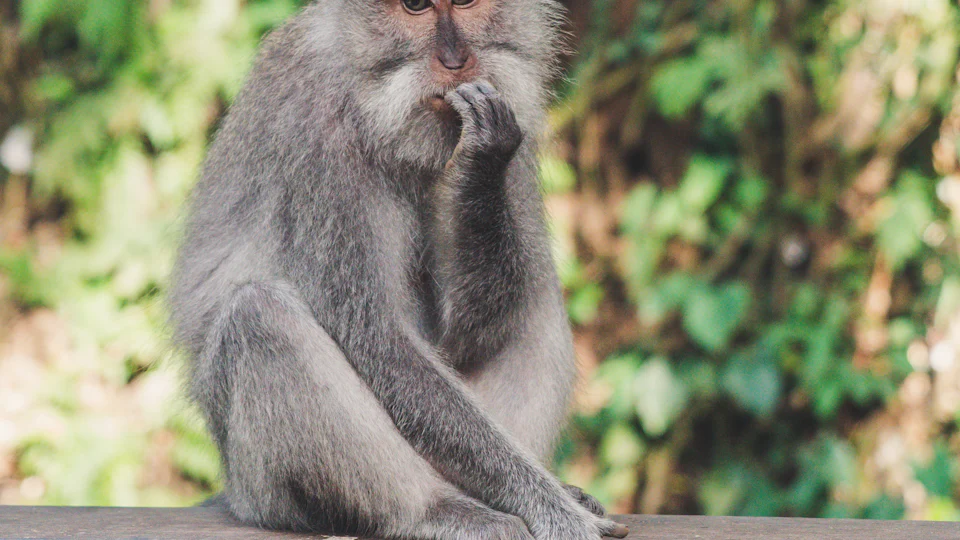
Three temples stand among the banyan roots: Pura Dalem Agung Padangtegal (the temple of the dead, and the largest), Pura Prajapati (used for cremation rites) and Pura Beji, a bathing temple fed by a spring in the north of the grounds. Their inner courtyards are reserved for worshippers; visitors admire the gates, carvings and mossy stonework from the paths. The macaques — the reason most people come — are wild, protected, and very much in charge.
The safety rules that actually matter
Read this before anything else. The monkeys are clever and bold, and most "monkey incidents" are avoidable:
- No eye contact. A hard stare reads as a challenge. Keep your gaze soft and your face neutral — no toothy smiles, which look like a threat.
- Carry nothing loose. Sunglasses, hats, phone lanyards, water bottles, jewelry and dangling bag straps all get snatched. Zip everything away.
- Never bring or offer food. Feeding is prohibited, and a visible snack turns a calm monkey into a determined one.
- Don't chase or grab back. If a macaque takes something, stay calm and ask a ranger — staff retrieve items routinely, often with a trade of fruit.
- Keep small children close and hold their hands throughout.
A scratch or bite should be washed and seen by a clinic the same day (rabies is a real, if rare, risk in Bali) — one more reason to give the monkeys their space. Travel insurance that covers a clinic visit is worth having for Bali generally, and this is the sort of place it earns its keep.
One more thing worth knowing: the macaques live in several distinct groups with their own territories inside the forest, and the boundaries between them are where you'll see the most chasing and screaming. It looks alarming and is usually monkey business rather than anything aimed at you — but stand still, don't step between them, and let it pass.
Tickets, hours and getting there
The main gate is at the southern end of Jalan Monkey Forest (Monkey Forest Road), with entrances from the Padangtegal and Nyuh Kuning sides too. Buy tickets at the gate; adult and child fares are charged separately, and while cash is the safe bet, card and QRIS payment are increasingly accepted. Go soon after opening for cooler air, softer light and calmer monkeys before the tour groups arrive.
Central Ubud is walkable to the sanctuary — from the Ubud Palace and market it's about 15 minutes on foot straight down Monkey Forest Road. Taxis and ride-hailing (Grab, Gojek) serve the area, though app pickups can be restricted right in the centre, so a metered taxi or a hired driver is the fallback. There is paid parking near the main entrance, which fills up mid-morning; if you're driving yourself, the Nyuh Kuning side is usually calmer. If you're combining sights, the forest pairs naturally with the temples and rice fields on an Ubud temple day trip.
The three temples inside the Ubud Monkey Forest
Most visitors come for the macaques and leave without registering that they have walked through a serious religious site. The temples date to around the 14th century and are still in active use, which is why the dress and behaviour rules matter.
Pura Dalem Agung Padangtegal is the largest, set in the south-west of the grounds. As a pura dalem — a temple of the dead, associated with Shiva in his destroyer aspect — its gateway carvings lean towards the fierce: guardian figures, and a Rangda-like face over the entrance. The moss-blackened stone and the canopy overhead make it the most atmospheric corner of the forest.
Pura Beji sits in the north, by the spring. As a bathing temple it is where villagers perform purification rites, and its setting beside running water and heavy vegetation is the quietest part of the grounds — the macaques are calmer here too, and it's the best place to simply sit for ten minutes.
Pura Prajapati stands near the cemetery in the north-east and is used in cremation rites. Bodies may be buried temporarily nearby before a mass cremation ceremony, so treat this area with particular restraint and don't wander off the paths.
You will not usually be admitted into the inner courtyards unless you are there to worship and properly dressed in a sarong and sash. What you photograph and admire are the gates, walls and carvings from outside — which is where the best of the stonework is anyway. Our guide to temple etiquette in Bali covers the dress code and the rules in full, and the temples of Ubud if you want to see more of them.
What the walk is like
The route is a loop of well-made paths, and you can do the whole thing in 45 minutes at a steady pace or stretch it to two hours if you stop often. From the main gate the path runs down into the valley, and the change is immediate — the traffic noise of Monkey Forest Road drops away and the air goes cool and damp.
The highlight for most people isn't a temple at all but the dragon bridge: a stone span across the ravine, its balustrades carved into naga serpents and thick with moss and ferns. Below it a stream runs over rocks; above it the banyans drop curtains of aerial roots that the macaques use as ropes. There are stairways down to the water and a second, smaller bridge further along.
The northern end near Pura Beji is the calmest stretch — fewer visitors get that far, and it's where the forest feels most like forest. Give yourself time to slow down there. The banyan trees and the carved bridges are as photogenic as the macaques, and far less trouble to photograph.
Best time of day to visit
Soon after opening (around 9:00) is the best call, and it isn't close. The air is cooler, the light through the canopy is soft rather than blown-out, the macaques are active but not yet worked up, and the tour buses haven't landed. By 11:00 the main paths are busy and the monkeys have learned that the crowd carries snacks.
Late afternoon is the second-best window, quieter again after about 16:30 as the day groups leave, with warm light in the upper canopy. Avoid the middle of the day if you can: it's hot, the light is flat and harsh under the trees, and the crowd is at its peak.
Practical details
- Bring: covered shoes with grip (the stone gets slick), water, a zipped bag, and a sarong if you might want to attend a temple properly.
- Facilities: toilets and a café are near the main entrance, and there are basic washrooms inside the grounds. Rangers are stationed along the paths — they are the people to ask if anything goes wrong.
- Rain: the paths are paved but the stone and the wooden rails get genuinely slippery, and the ravine sections are the worst of it. A light rain is a fine time to visit for atmosphere and low crowds; heavy rain is not.
- Accessibility: the loop involves stairways and slopes in and out of the ravine, so it is hard going with a wheelchair or a pushchair. The flatter section near the main entrance and Pura Dalem Agung is the manageable part.
- What not to bring: plastic bags (they read as food), open drink bottles, and anything you'd be upset to lose.
Is it worth it?
Yes — with a caveat. If you want a quiet nature walk, this is not that: it's a busy attraction in the middle of a busy town, and the macaques are habituated to people in a way that keeps you on your guard. What makes it worth the hour is the combination you don't get elsewhere — old temple architecture, ravine forest, and wild primates living around both, ten minutes' walk from lunch.
If you've been and want the same thing with fewer people, Sangeh Monkey Forest north of Denpasar is a nutmeg forest with its own macaque population and a fraction of the visitors, though it's a drive rather than a walk. And if your itinerary already includes Uluwatu Temple, be warned that its clifftop macaques are the most practised thieves on the island — the rules on this page apply double there. For where the forest fits in a wider trip, see our 5–7 day Bali itinerary.
Frequently Asked Questions
How much does the Ubud Monkey Forest cost?
Entry is a modest fee, charged separately for adults and children — recent visitors report roughly IDR 80,000 for adults and less for children. Prices change, so bring cash and check the current rate posted at the ticket office.
What are the opening hours?
The sanctuary is open daily, roughly from 9:00 in the morning until about 6:00 in the evening, with last tickets sold in the late afternoon. Arriving near opening is the most comfortable time.
How long do you need at the Monkey Forest?
Most visitors are happy with one to two hours — enough to walk the loop, watch the monkeys, and see the three temples without rushing. The paths themselves take about 45 minutes at a steady pace.
Which temples are inside the Ubud Monkey Forest?
Three, all around 14th century and still in active use: Pura Dalem Agung Padangtegal, the large temple of the dead in the south-west of the grounds; Pura Beji, the bathing temple by the spring in the north; and Pura Prajapati, near the cemetery in the north-east, used in cremation rites. Visitors admire the gates and carvings from outside — the inner courtyards are for worshippers in sarong and sash.
Where is the Monkey Forest in Ubud, Bali?
At the southern end of Jalan Monkey Forest (Monkey Forest Road), on the edge of Padangtegal village in central Ubud, with further entrances on the Padangtegal and Nyuh Kuning sides. Its Balinese name is Mandala Suci Wenara Wana, which is how it appears on some local signage.
Is the Monkey Forest safe for children?
Yes, with close supervision. Hold young children's hands, keep snacks and loose items out of sight, and teach them not to stare at the monkeys or smile with their teeth. Nervous toddlers may find the bolder macaques overwhelming.
Can you walk to the Monkey Forest from central Ubud?
Yes. It's about a 15-minute walk south from the Ubud Palace and market, straight down Monkey Forest Road, and that's usually faster than a car in Ubud's traffic.
Can I take photos of the monkeys?
Yes — but keep your distance, skip the flash, and never pose with or lure a monkey for a shot. A phone on a loose lanyard is a common casualty, so hold it firmly.
What should I do if a monkey takes my belongings?
Stay calm and don't chase it. Ask a ranger; staff retrieve snatched items routinely, often by trading a piece of fruit. Afterwards, zip everything away so it doesn't happen twice.
Do I need to wear a sarong in the Monkey Forest?
Not for the walking paths — normal modest clothing is fine. A sarong and sash are required only if you enter a temple's inner courtyard to worship, and shoulders and knees covered is the respectful default anywhere near the shrines.