Temples Near Ubud: A One-Day Circuit Around the Town
The morning mist clings to the steep cliffs of the river gorge as the first light hits the ancient stone carvings of Goa Gajah. Here, in the cultural heart of Bali, history is not confined to museums but is etched into the landscape itself. A single day links a chain of sacred sites, from the shadowy Elephant Cave to the royal tombs of Gunung Kawi and the bronze-age drum at Pejeng. For travellers who want to understand Ubud beyond its cafés, this temple circuit is one of the clearest windows into Balinese Hinduism, ancient architecture and the bond between the island's people and their land. If this is your first temple visit, read our guide to Bali temple etiquette before you set out.
The Ancient Entrance: Goa Gajah and Its Mysteries
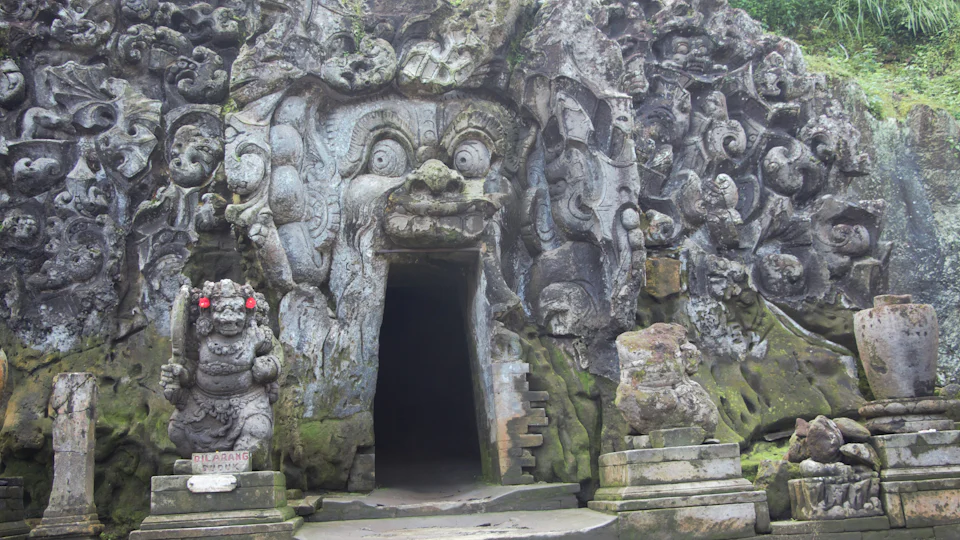
Goa Gajah, commonly known as the Elephant Cave, is one of the most iconic and enigmatic landmarks in the Ubud area. The name comes from the carved face that frames the mouth of the cave, a threshold that has intrigued archaeologists and visitors for generations. Generally dated to around the 11th century, the site was not only a place of worship but also a meditation retreat and a bathing complex. The cave itself is small and dark, leading to a narrow chamber once used for prayer and reflection. The air inside is cool and damp, a sharp contrast to the tropical heat outside.
Around the main cave you will find a series of rock-cut bathing pools and shrines dedicated to Hindu deities, structures that show the water engineering of early Balinese builders. The site also has stone statues, some of them fierce guardians meant to ward off evil spirits. It remains an active place of reverence for many locals, so it deserves a quiet, respectful approach. The detailed carvings and the sheer age of the site make it a strong starting point for any temple circuit in the region.
Royal Tombs and Sacred Water: Gunung Kawi
Set in Tampaksiring, a short drive from Ubud, Gunung Kawi is a masterpiece of Balinese funerary architecture. The complex holds ten large shrines (candi) carved directly into the rock face on either side of the Pakerisan river. These monuments date to the 11th century and are widely believed to honour King Anak Wungsu of the Udayana dynasty and his queens. Reaching them means descending a long, steep staircase, a passage that feels symbolic — a move from the world of the living toward the world of the ancestors.
At the bottom of the valley the site opens onto terraced lawns, water channels and smaller shrines fed by the sacred Pakerisan. The setting is lively during temple ceremonies, when local families arrive with offerings and priests lead the prayers. The combination of dramatic cliff-side tombs and running spring water gives Gunung Kawi a rare double character, where history and living practice sit side by side. The lush greenery around the valley makes it a fine place for slow walking and photography.
Bronze-Age Wonder: The Moon of Pejeng
Another key stop is Pura Penataran Sasih in Pejeng, long an important sanctuary in the old Pejeng heartland. The temple is famous for housing the "Moon of Pejeng", a colossal bronze kettledrum and one of the most significant archaeological finds in Bali. Cast more than two thousand years ago in the Dong Son bronze-age tradition of Southeast Asia, it is often described as the largest single-cast bronze drum in the world. Balinese legend tells it differently — that the drum is a fallen wheel of the moon that came to rest in Pejeng — and that story still colours the atmosphere of the courtyard. The carvings and statues around the temple carry motifs from Hindu epics and centuries of local worship.
Visiting Pura Penataran Sasih gives a sense of just how deep Bali's history runs. The drum remains the focal point, drawing historians and pilgrims alike, while smaller shrines and statues fill the surrounding courtyards. It is best seen early in the morning, when the light is soft and the crowds are thin, and the weight of the site's age is easy to feel in the quiet.
Practical Tips for Your Temple Circuit
Planning a day around these temples takes some thought about logistics, etiquette and timing. The sites are spread across the Gianyar Regency, so reliable transport matters. Renting a scooter suits confident riders, but hiring a driver is usually more comfortable and lets you focus on the sites rather than the roads. Each temple keeps its own hours, so map your route in advance, and remember these are active places of worship, not just attractions. Dressing correctly and behaving calmly shows respect and, in practice, opens the sites up to you.
- Wear a sarong and sash; most temples require this to enter, and while many sites rent them at the gate, bringing your own is easier.
- Hire a local driver for the day to handle the narrow roads and parking, which can be stressful for visitors new to the area.
- Start early, around 8:00 AM, to beat the heat and the crowds and to catch the quieter, more contemplative side of each site.
- Avoid visiting during major Hindu ceremonies unless you are welcomed; check local calendars, since big dates can close sites to tourists.
Two More Cultural Gems: Batuan and Yeh Pulu
Beyond the major sites, the Ubud area is dotted with smaller temples that show everyday village life. Pura Puseh Batuan, for instance, is a village temple known for its finely worked stone carvings, with roots going back to 1022. It shows classic Balinese architecture, including a dark palm-fibre roof and a tiered gateway. A morning visit, when families lay out colourful offerings, offers an intimate, authentic counterpoint to the grander historical monuments. To time your trip well overall, see our guide to the best time to visit Bali.
Yeh Pulu pairs a small shrine with an archaeological park built around a sacred spring. It draws devotees at the full moon, and its highlight is a relief wall roughly 25 metres long carved with scenes of old Balinese life — hunting, carrying, daily labour. That stone narrative is a rare visual record of the island's past, and the quiet, green setting makes it a rewarding last stop. Together these smaller sites round out the circuit, adding depth to the more famous stops covered in our sacred temples of Ubud guide.
Frequently Asked Questions
What is the best time to visit the temples in Ubud?
Aim for early morning, shortly after the sites open, around 8:00 AM. You avoid the midday heat and the peak crowds, and the light and mood are better for both photography and quiet reflection. The dry season, roughly April to October, is the most comfortable window for a full day outdoors.
Do I need to hire a guide for the temple circuit?
It is not required, but a good local guide adds a lot. They can explain the carvings, rituals and legends behind each site — context that is easy to miss on your own — and turn a sightseeing run into something closer to a lesson in Balinese history and belief.
Are there restrictions on photography at these temples?
Photography is generally fine in the outer courtyards but is often restricted inside the main sanctuaries and during ceremonies. Look for signs or ask a staff member first, avoid flash, and never photograph people at prayer without permission. Correct dress is also part of being allowed onto the grounds at all.
Final Tips for a Meaningful Journey
Setting out on the Ubud temple circuit is more than sightseeing; it is a chance to connect with the spiritual heart of Bali. Approach each site with respect and curiosity and you will come away with a deeper feel for the island's heritage. Take your time, watch the details, and engage with the people around you. One small, practical tip: carry a little cash in rupiah for entrance fees and donations, and consider leaving a modest offering at one of the smaller shrines — a simple gesture that often opens the door to warm, unhurried conversations with locals.
Sources and further reading: Indonesia.travel (official tourism) and the historical background on Gunung Kawi and the Moon of Pejeng.