Pura Besakih: Visiting Bali's Mother Temple
High on the southern slope of Mount Agung, where the air thins and clouds drift through the courtyards, stands the largest and holiest temple on Bali. Pura Besakih is the island's Mother Temple — not a single shrine but a vast complex of more than twenty temples climbing the mountainside in terraces, aligned with the volcano that the Balinese hold most sacred. To stand at its foot and look up the central stairway, with Agung filling the sky behind, is to understand why every other temple on the island draws its bearings from this one.
Besakih is also the most misunderstood temple on Bali for a visitor. For years it had a reputation for pushy "guides" and donation demands that soured many trips; a newer official visitor system has changed how you arrive and what you pay. This guide covers what the complex is, how to visit it now without stress, what it costs, when to come, and how to fold it into a trip. If this is your first Balinese temple, start with our guide to Bali temple etiquette.
Besakih sits in East Bali, on the same great volcano as the famous gate at Pura Lempuyang, and it completes the island's temple story that begins in town with the temples of Ubud.
Why Besakih Is Bali's Mother Temple
The title is not marketing. Besakih is the spiritual centre of Balinese Hinduism, the one temple that belongs to the whole island rather than a single village or clan. Every regency of Bali maintains shrines here, and the great island-wide ceremonies — some held only once a century — happen on these terraces. When Balinese say a temple "faces Besakih," they mean it in the most literal sense: the complex is the reference point for the entire sacred geography of the island.
Its setting carries the same weight. At around 1,000 metres on the flank of Mount Agung, Besakih stands closest of all temples to the mountain the Balinese consider the home of the gods and the axis of their world. The most retold proof of that bond is the eruption of 1963: lava poured down Agung, killed more than a thousand people, and stopped just short of the temple. Believers took it as a sign; sceptics note the terrain; either way, the complex survived, and its standing only grew.
The History and Layout of the Complex
Worship on this spot is very old — the site was likely sacred long before the present temples, with the main sanctuary dated to around the 14th century and expanded over the centuries into the complex you see today. It has been a state temple of successive Balinese kingdoms, which is why it is grander and more formal than the village temples elsewhere on the island.
Besakih is best understood as a city of temples rather than one building. More than twenty separate pura share the slope, linked by stairways and terraces that rise toward the peak. At the heart stands Pura Penataran Agung, the great central temple, built up in ascending courtyards with the meru towers and the tall split gate that most photographs show. Around it, clan and regional temples each keep their own role in the island's ritual calendar.
The Temples Within
You do not need to name every shrine to appreciate the place, but a few anchor the visit. Pura Penataran Agung is the centrepiece, the one you climb toward up the long central stair. Flanking temples honour the Hindu trinity — Brahma, Vishnu and Shiva — and their colours and positions follow a deliberate order up the mountain. Much of the inner sanctum is reserved for worshippers, so you admire the gates, terraces and towers from the walkways rather than entering the holiest courtyards, especially when a ceremony is under way.
Visiting Besakih: Tickets, the Shuttle and the Grounds
In recent years the authorities built a formal visitor centre below the temple and reorganised arrivals to curb the old free-for-all. In practice that usually means you park at the centre, pay a set entrance package and ride a short shuttle buggy up to the temple area rather than driving or walking to the gates yourself. Expect a combined ticket in the region of IDR 150,000 per adult including the shuttle; as everywhere on Bali, treat any figure online — including this one — as a guide, since the arrangements and prices are still settling and are revised periodically. Opening hours run roughly from 8:00 AM to around 6:00 PM.
Once up top, the visit is a walk: you follow the walkways and stairs between the temple courtyards, with the central stairway and Mount Agung as the set-piece view. The ground is uneven and climbs, so wear real shoes rather than loose sandals, and pace yourself — the altitude makes the stairs harder work than they look.
Avoiding the "Guide" Scam
Besakih's old reputation came from unofficial "guides" who would attach themselves to visitors, imply a guide was compulsory, walk you around and then demand a large "donation," sometimes blocking access to pressure a payment. The new visitor-centre system was built largely to stop this, and the situation is much improved — but be clear and calm regardless. A guide is not required to enter. If you want one, agree the price in writing before you start; if you do not, a polite, firm "no, thank you" is enough. Any "donation book" showing huge sums from previous visitors is a prop — give only what you choose, at the official desk.
What to Wear
Getting There and Timing
Besakih lies in the Karangasem regency of East Bali, on the southern slope of Mount Agung, roughly an hour and a half by car from Ubud and about two to two and a half hours from the southern beach towns. There is no practical public transport, so most visitors come with a driver for the day, which also lets you pair the temple with other sights in the east. The mountain road is scenic but winding — not one to rush. Timing pairs naturally with our guide to the best time to visit Bali.
Come early. Besakih sits high enough that cloud routinely builds over Agung by late morning and can swallow the peak entirely; arrive soon after opening and you get the clearest views, the softest light and the fewest crowds, before the tour groups and the weather close in. To see where the temple fits across a longer trip, our 5–7 day Bali itinerary links the east into the wider route.
What Else to See Nearby
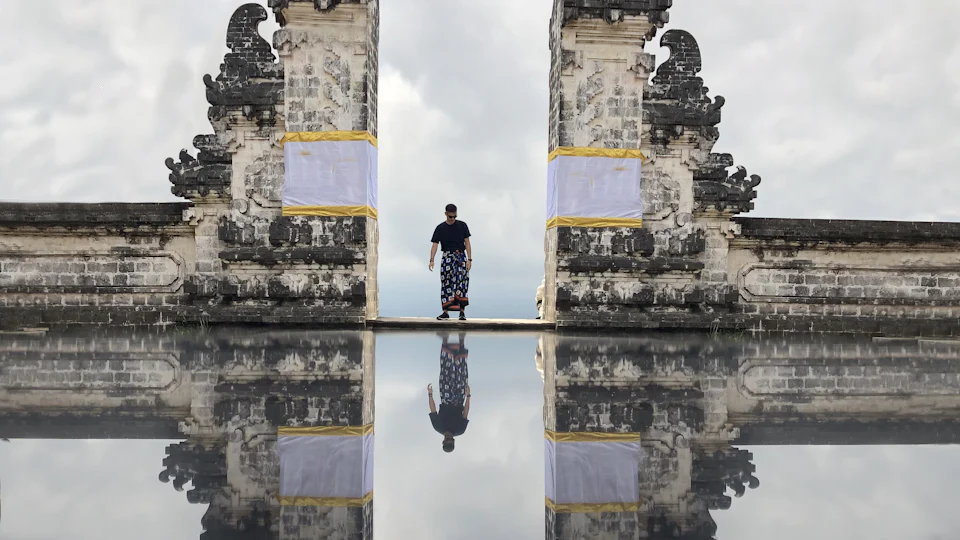
East Bali rewards the drive. The dramatic split gate of Pura Lempuyang — the "Gates of Heaven," framing the same Mount Agung — sits in the same region and is often paired with Besakih on a single eastern day. The spring temple of Tirta Empul lies on the way back toward Ubud, and the quieter villages, rice terraces and viewpoints of the east make the long day out worthwhile in their own right.
Frequently Asked Questions
How much does Besakih cost, and is there a shuttle?
Expect a set entrance package in the region of IDR 150,000 per adult, which usually now includes a short shuttle buggy from the visitor centre up to the temple. A sarong is generally included or rented at the gate. Prices and the exact arrangement are revised periodically, so confirm locally and carry small rupiah notes.
How far is Besakih from Ubud?
About an hour and a half by car, heading east toward Mount Agung in the Karangasem regency, and roughly two to two and a half hours from the southern beach areas. There is no direct public transport, so most visitors hire a driver for the day.
What is the dress code for Besakih?
A sarong and sash are required, with shoulders and knees covered; sarongs are usually included with the ticket or available to rent at the entrance. Bring a light layer as well, since the mountain air at 1,000 metres is cool and the weather can change fast.
Is Pura Besakih worth visiting?
Yes, if you come for the scale and the setting rather than a single photo — it is the island's holiest and largest temple, set against Mount Agung, and unlike anywhere else on Bali. Its old reputation for aggressive "guides" has eased under the new visitor system; arrive early, dress properly and stay calm about offers of help, and it rewards the trip.
Final Thoughts
Besakih asks a little more of a visitor than Bali's easy postcard temples — a longer drive, a climb, a mountain that makes its own weather, and the self-possession to wave off a hard sell at the gate. Give it those, and you reach the spiritual summit of the island: terraces of shrines stacked toward a volcano the Balinese have revered for a thousand years. One practical tip: leave Ubud early enough to be walking the terraces not long after opening, while Agung is still clear of cloud — that first hour, with the mountain sharp behind the gates, is the whole reason to come.
Sources and further reading: Indonesia.travel (official tourism) and UNESCO on the Cultural Landscape of Bali: the Subak System.