Pura Lempuyang: A Guide to the Gates of Heaven
Mist clings to the jagged peaks of Mount Lempuyang, creating a soft veil that separates the earthly realm from the divine. Standing at the edge of this sacred precipice in East Bali, visitors are greeted by a sight that has captivated millions: the iconic stone gate framing the distant silhouette of Mount Agung. This is Pura Lempuyang Luhur, widely known as the "Gates of Heaven." It is not merely a photogenic backdrop but one of the most significant spiritual sites on the island, offering a profound blend of natural beauty and religious devotion that draws travelers from every corner of the globe.
Understanding the Spiritual Significance of Pura Lempuyang
Pura Lempuyang Luhur is far more than an Instagram hotspot; it is a place of deep spiritual resonance. As one of the seven most important temples in East Bali, it holds a revered position in the Balinese Hindu hierarchy. The temple complex is situated on the steep slopes of Mount Lempuyang, a location chosen for its proximity to the heavens and its commanding view of the sacred Mount Agung. For locals, this site is a place of prayer, reflection, and offering, where the boundary between the physical world and the spiritual realm feels remarkably thin.
The architecture and layout of the temple reflect traditional Balinese cosmology. The complex is divided into three main areas: the outer courtyard, the middle courtyard, and the inner sanctum. Each section serves a specific purpose in ritual practice, guiding devotees from the mundane into the sacred. The most famous feature, the stone gate, is not actually the entrance to the temple itself but a ceremonial gate located within the complex. It is designed to frame the view of Mount Agung, symbolizing the connection between the earth and the divine. Understanding this context transforms the visit from a simple photo opportunity into a respectful cultural experience.
Visitors should approach the site with an awareness of its sanctity. The temple is an active place of worship, and the daily rituals performed by priests are integral to the community's spiritual life. By recognizing the temple's role beyond its visual appeal, travelers can engage with the site in a more meaningful way. This perspective encourages a slower, more observant approach, allowing guests to appreciate the intricate carvings, the smoke of burning incense, and the quiet devotion of the pilgrims who visit to seek blessings.
How to Reach the Gates of Heaven
Reaching Pura Lempuyang Luhur requires a journey into the eastern part of Bali, away from the bustling tourist hubs of Kuta and Seminyak. The temple is located approximately 10 kilometers northeast of Tirta Gangga, a royal water palace that serves as a common reference point for travelers. The road to the temple is winding and steep, navigating through lush tropical forests and dramatic mountain passes. This journey offers stunning vistas of the surrounding valleys and the Indian Ocean in the distance, setting the tone for the spiritual atmosphere that awaits at the summit.
Access to the temple is managed to preserve the sanctity of the site and ensure visitor safety. From the main car park, which is situated at a lower elevation, visitors cannot walk directly to the temple gates. Instead, they must take a short jeep ride up the steep road to the security entrance. This jeep service is operated locally and is an essential part of the logistics for reaching the upper temple grounds. The ride is brief but provides a final ascent into the misty heights where the temple stands. It is important to note that private vehicles are not permitted to drive up to the temple entrance, making the jeep transfer a mandatory step for all visitors.
For those traveling from southern Bali, the drive can take between two to three hours, depending on traffic conditions. Many visitors choose to hire a private driver or join a guided tour to make the journey more comfortable and informative. These services often include stops at other nearby attractions, such as the Tirta Gangga water palace or the Lempuyang Temple's sister site, Pura Luhur Lempuyang. Planning the trip early in the day is advisable, as traffic in East Bali can become congested during peak hours. Ensuring you have enough time for the drive allows you to arrive at the temple with ample time to explore and take photos without feeling rushed.
- Take the local jeep from the car park for a flat fee of 20,000Rp per person, which covers both the ascent and the return trip.
- Hire a private driver from South Bali to avoid the stress of navigating winding mountain roads and to ensure a comfortable journey.
- Arrive at the temple car park before 8:00 AM to secure a spot and avoid the largest crowds that typically arrive mid-morning.
- Bring cash in Indonesian Rupiah for the jeep fare and temple entry fees, as card payments are not accepted at the gate.
Mastering the Famous Reflection Photo
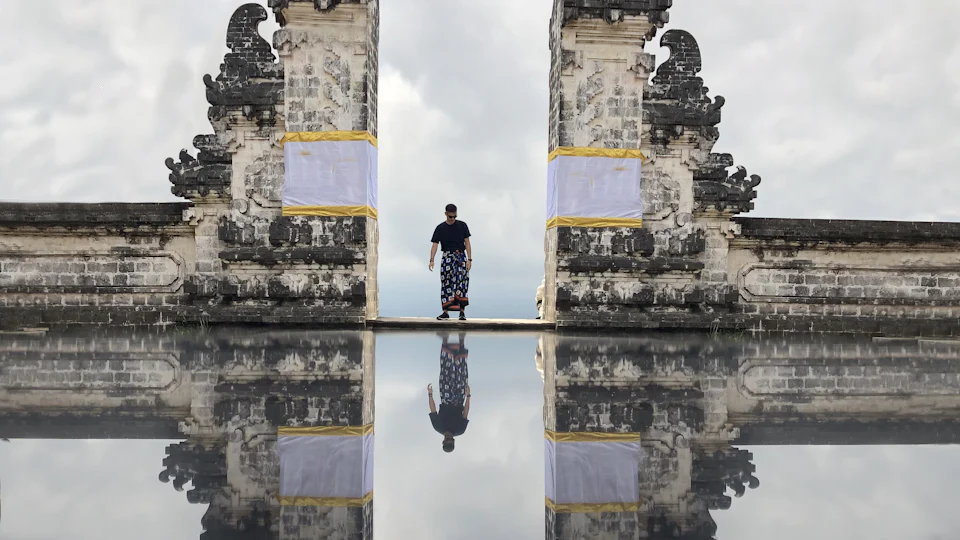
The phenomenon that has made Pura Lempuyang Luhur globally famous is a clever photographer's trick, not a natural reflection. There is no pool of water on the ground: a local temple photographer holds a piece of glass or a small mirror just beneath a phone's lens, and the reflection of Mount Agung and the gate appears in it, creating a perfect mirror image that seems to place the mountain directly beneath the gate. This "Gates of Heaven" shot has become one of the most iconic images in travel photography, drawing thousands of visitors eager to capture their own version of this surreal scene. The effect is most striking when the weather is overcast, as the diffuse light enhances the contrast between the dark stone, the misty background, and the reflective surface.
However, achieving the perfect shot requires patience. Because the effect is made with the photographer's mirror rather than the weather, it works in any conditions — but a single official photographer handles every shot, so visitors often wait in line for an hour or more. To manage the crowds, a system of queuing is usually in place, with helpers guiding visitors through the process. It is crucial to follow the instructions of these helpers, as they ensure that the flow of people remains orderly and that everyone gets a chance to take their photos. Rushing or cutting in line is frowned upon and can disrupt the experience for others.
Photographers should also consider the composition of their shots. While the standard view is from directly in front of the gate, experimenting with different angles can yield unique results. The temple's official photographers take the mirror shot on your own phone, so you have little control over the setup. This is why early morning visits are recommended: not for the light on the ground, but to beat the crowds and the long queue, and for a clearer view of Mount Agung before clouds build over the peak. Despite the crowds, the effort is often rewarded with a memorable image that captures the mystical essence of the location.
Essential Temple Etiquette and Dress Code
Respecting Balinese Hindu customs is paramount when visiting Pura Lempuyang Luhur. The temple is a sacred space, and visitors are expected to adhere to strict dress codes and behavioral norms. Upon arrival, you will be required to rent a sarong and sash, which are available for a small fee at the entrance. These items must be worn correctly, with the sarong covering the knees and the sash tied around the waist. Even if you are wearing long pants or a skirt, it is customary to wear the sarong as a sign of respect for the local culture. Failure to adhere to the dress code may result in being denied entry.
In addition to the dress code, visitors must observe certain behavioral guidelines. Photography is permitted in most areas, but it is important to avoid taking pictures of people who are praying or performing rituals unless you have their explicit permission. The inner sanctum of the temple is off-limits to non-devotees and tourists, so it is essential to stay within the designated areas. Touching the offerings or sacred objects is strictly prohibited, as these items hold spiritual significance for the local community. By following these rules, visitors show respect for the religious practices and help maintain the sanctity of the site.
Another important aspect of temple etiquette is maintaining a quiet and respectful demeanor. Loud noises, running, or disruptive behavior are considered inappropriate in a sacred space. Visitors are encouraged to move slowly and calmly, allowing them to absorb the atmosphere and show reverence for the environment. If you are unsure about a particular action, it is always best to ask a temple staff member or follow the lead of local devotees. This mindful approach not only enhances your own experience but also contributes to a positive interaction with the local community.
Best Time to Visit for Ideal Conditions
The timing of your visit to Pura Lempuyang Luhur can significantly impact your experience. The early morning hours, particularly between 6:00 AM and 9:00 AM, are generally considered the best time to visit. During this period, the crowds are smaller, and the light is soft and diffuse, which is ideal for photography. The mist that often clings to the mountains in the morning adds to the mystical atmosphere, creating a serene and peaceful environment. Arriving early also means a shorter queue for the photographer's mirror shot and a better chance of seeing Mount Agung before the clouds roll in.
The dry season, which runs from April to October, is typically the most popular time to visit due to the favorable weather conditions. However, this also means that the temple can be more crowded. If you prefer a quieter experience, consider visiting during the shoulder seasons of March or November, when the weather is still relatively good but the number of tourists is lower. The wet season, from November to March, brings more frequent rainfall, which can enhance the reflection effect but may also lead to slippery conditions and occasional closures due to safety concerns. It is important to check the weather forecast before your visit and dress appropriately for the conditions.
Local holidays and religious festivals can also affect the visitor experience. During major Balinese Hindu ceremonies, the temple may be closed to tourists or have restricted access. These events are important for the local community, and visitors are advised to respect these closures. If you plan to visit during a festival, it is best to check with local tour operators or the temple authorities for updates on access and schedules. Planning your visit around these events can help you avoid disappointment and ensure a smooth experience.
Frequently Asked Questions
Is it safe to visit Pura Lempuyang Luhur?
Yes, the temple is generally safe for visitors. However, the road to the temple is steep and winding, so caution is advised when taking the jeep ride. The temple grounds themselves are well-maintained, but visitors should be mindful of their surroundings, especially when taking photos. It is also important to be aware of your belongings, as pickpocketing can occur in crowded areas. Following the instructions of temple staff and staying within designated areas will help ensure a safe visit.
Can I visit the inner sanctum of the temple?
No, the inner sanctum of Pura Lempuyang Luhur is restricted to devotees and priests. Tourists are allowed to visit the outer courtyards and the famous gate area, but access to the innermost parts of the temple is prohibited. This restriction is in place to preserve the sanctity of the site and respect religious practices. Visitors should respect these boundaries and avoid attempting to enter restricted areas.
How much does it cost to enter the temple?
There is a small entry fee for visiting Pura Lempuyang Luhur, which is typically around 15,000Rp to 20,000Rp. This fee helps maintain the temple grounds and supports the local community. In addition to the entry fee, there is a charge for the jeep ride from the car park to the temple entrance, which is 20,000Rp per person. Sarong and sash rentals are also available for a small fee if you do not have appropriate attire.
Conclusion
Visiting Pura Lempuyang Luhur is a unique experience that combines natural beauty, spiritual significance, and cultural immersion. By understanding the temple's history, respecting local customs, and planning your visit carefully, you can make the most of this iconic site. Remember to arrive early, dress appropriately, and approach the temple with a sense of reverence. One final tip: take a moment after your photos to simply sit and listen to the sounds of the mountain. In that silence, you may find the true essence of the Gates of Heaven.