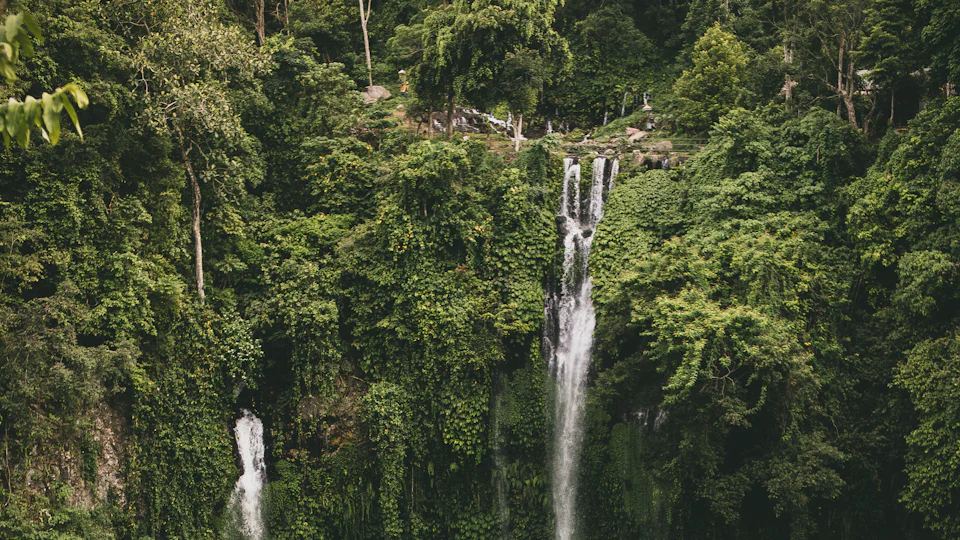
Chasing Sekumpul, Bali's Hidden Waterfall
Deep in north Bali, a cluster of falls drops through a jungle gorge — the tallest and most dramatic set of waterfalls on the island. Getting there takes commitment, a bit of cash, and a tolerance for stairs. It's worth all three.
The short version: Sekumpul sits roughly two and a half hours north of Ubud and opens daily from 8am to 5pm. Three tickets are sold at the gate — 20,000 IDR to see the falls from the viewpoint, 150,000 for the trek down to the base, 250,000 for the longer walk that adds Fiji waterfall. Both trekking tickets include a local guide.
Getting there, and when the gate opens
Sekumpul lies in Buleleng regency, in the hills above Singaraja. From Ubud the drive runs about two and a half hours each way on winding road; from Canggu or Seminyak, closer to three.
If you are staying on the north coast at Lovina, it is well under an hour, which is why the falls make far more sense as a north-Bali day than as a detour from the south.
The gate opens daily at 8am and closes at 5pm. Start the full descent by early afternoon at the latest — the climb out is slower than the climb down, and nobody enjoys doing it in the dark.
What you're actually visiting
"Sekumpul" is really several waterfalls in one valley, best seen together from the river at the bottom. Locals count six or seven strands depending on how much rain has fallen, though two of them dominate, dropping side by side through the trees.
A second fall, Fiji, sits further along the same gorge. Reaching it is a separate stretch of walking, which is why it belongs to the longer ticket rather than the standard one.
The descent is a long staircase — hundreds of steps down, and the same back up. It's not technical, but it's a genuine workout, especially in the heat.
You can skip the descent altogether. The viewpoint ticket puts you on a platform across the gorge with both falls in sight, which is a real view rather than a consolation prize — worth knowing if you have knees to protect or a driver on the clock.
The fees, plainly
This is where visitors get caught out, and the confusion is worth sorting out before you arrive rather than at the gate. There are three official tickets, and the two trekking ones already include a local guide and insurance:
- 20,000 IDR — viewpoint only. No descent, no guide, no river.
- 150,000 IDR — the trek down to the base of Sekumpul and back, guide included.
- 250,000 IDR — the long trek, adding Fiji waterfall to the same walk, guide included.
Pay at the official entrance, the one beside the "Welcome to Sekumpul" sign. That is the only place these prices apply.
On the roads leading in you will pass hand-painted boards reading "Sekumpul Registration" and similar. They are not the entrance. They belong to people collecting money short of the real site, and the path behind them does not reach the falls. Drive past them, however official the lettering looks.
Bring cash in small notes — there are no card machines in the gorge — and budget a tip for a guide who has walked you down and back up.
One fee people forget is the island-wide tourist levy: 150,000 IDR per person, once per entry to Bali, paid online or at the airport. It has nothing to do with the waterfall, but it catches travellers out the same way. The Bali Sun keeps a current explainer of who has to pay and how.
Footwear and the river crossing
Skip the sandals. The steps are steep and often wet, and reaching the base of the main falls usually means wading across a river that can run fast after rain.
Wear shoes you don't mind soaking, and pack anything precious in a dry bag. Phones go swimming here more often than anyone admits.
The last stretch is the part that surprises people: loose rock underfoot, spray on every surface, and a current that pushes harder than it looks from the bank. Guides cross first and put a hand out for a reason.
When to go — and when not to
The falls are fullest in and just after the rainy season, roughly November to April. That is also when the river runs highest and the crossing is at its most dangerous.
The dry season, April to October, gives gentler flow and a safer trail. Mornings are clearest through those months, and the gorge holds usable light until around eleven.
After heavy rain, take local advice seriously. Flash flooding here is a real risk, and a guide who refuses the crossing on a running river is doing the job you paid for. Recent visitor reports on the TripAdvisor listing are a decent way to check trail conditions in the week before you go.
Two groups should think twice regardless of season. Anyone with a knee or hip that complains on stairs will have a hard afternoon, and small children tend to run out of patience somewhere around step two hundred. The viewpoint ticket exists for exactly these cases and nobody at the gate will blink at it.
Frequently asked questions
Do I need a guide for Sekumpul?
For either trekking ticket, yes — a local guide is built into the price and you will be assigned one at the gate. The 20,000 IDR viewpoint ticket does not include a guide, because it does not involve the descent or the river.
How much does it cost to visit Sekumpul?
Three prices, all paid at the official entrance: 20,000 IDR for the viewpoint, 150,000 IDR for the trek to the base of Sekumpul, and 250,000 IDR for the longer trek that takes in Fiji waterfall as well. Guide and insurance are included in the second and third.
What time does Sekumpul open?
Daily from 8am to 5pm. Arriving at opening buys you the coolest air, the best light in the gorge, and a trail you have largely to yourself for the first hour.
How long should I allow?
Two to three hours on site for the full descent and climb, not counting the drive. The way down takes most people around half an hour; the way back up takes rather longer, and there is no shame in the pace.
Is the "Sekumpul Registration" booth official?
No. The only place to buy tickets is the entrance by the "Welcome to Sekumpul" sign. Boards posted along the approach roads are unconnected to the site, and the tracks behind them do not lead to the falls.
Sekumpul rewards the effort in a way the roadside falls never do. Stand at the bottom, soaked in spray, with the jungle roaring above you, and the long climb back up suddenly feels like a fair price.
If you're building a north-Bali waterfall day, pair it with the quieter picks in our guide to Bali's hidden waterfalls, or plan the whole trip around the seasons with when to visit Bali. Travellers heading north often stack it a day after the Mount Batur sunrise trek, while the legs still work.