Nusa Penida Day Trip from Bali: Kelingking & Beyond
The jagged silhouette of the T-Rex cliff rises sharply from the turquoise Indian Ocean, a geological masterpiece that has defined Nusa Penida’s identity for decades. This is not merely a beach; it is a dramatic coastal landmark that demands respect from hikers and awe from photographers. As travel patterns shift in 2026, the journey from Bali to this smaller island southeast of the mainland remains one of the most sought-after day trips in Southeast Asia. The island offers a raw, untamed beauty that contrasts sharply with the polished resorts of the main island, providing a rugged adventure that feels both remote and accessible.
The Journey from Bali to Nusa Penida
Starting your day in Bali requires early preparation, as the logistics of crossing the strait are a crucial part of the experience. Most organized tours begin with a pickup between 05:45 and 07:00 AM, depending on your location in Sanur or nearby areas. This early start is necessary to catch the first fast boats around 7:00 AM, ensuring you maximize your daylight hours on the island. The boat ride itself is a short but significant transition, marking the shift from the bustling energy of Bali to the more serene, albeit windy, atmosphere of Nusa Penida. If you are still deciding when to come, our guide to the best time to visit Bali explains how the dry and wet seasons affect these crossings.
Upon arrival at the Nusa Penida harbor, the real adventure begins. You will meet a local host or driver who will guide you through the island’s winding roads in an air-conditioned vehicle. The roads here are narrow and often steep, carved into the hillsides with little room for error. This initial leg of the journey sets the tone for the day: expect motion, wind, and breathtaking views that appear around every corner. The transfer from the boat to your vehicle is seamless in organized tours, allowing you to focus on the scenery rather than the navigation.
Kelingking Beach: The Iconic T-Rex Viewpoint
No visit to Nusa Penida is complete without standing atop the Kelingking Cliff. This is the island’s most famous landmark, easily recognizable by its distinctive shape that resembles a Tyrannosaurus Rex diving into the sea. The viewpoint offers a panoramic perspective that is both intimidating and exhilarating. The drop is sheer, and the ocean below is a brilliant shade of blue that seems almost unnatural in its clarity. This location is the primary reason many travelers book a day trip, and it rarely fails to deliver on its promise of photographic perfection.
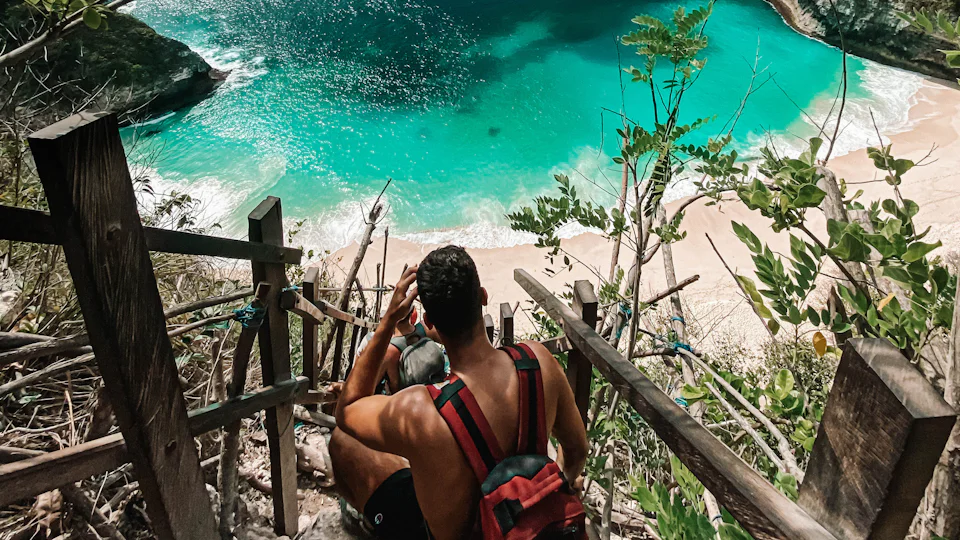
Reaching the beach below is a different story. The path down is steep, rugged, and lacks significant safety railings in many sections. It is not recommended for those with a fear of heights or poor physical fitness. The descent takes considerable time and effort, often longer than the climb back up. Many visitors choose to stay at the viewpoint, taking in the sweeping vistas of the coastline and the lush greenery that clings to the cliffs. The contrast between the arid, rocky upper slopes and the tropical vegetation near the shore creates a unique visual texture that changes with the weather and time of day.
East Nusa Penida: Diamond and Atuh Beaches
Moving eastward from Kelingking, the tour typically proceeds to Diamond Beach and Atuh Beach. These two locations are relatively close to each other and offer a different kind of coastal beauty. Diamond Beach features a crescent-shaped shoreline with white sand and clear waters, accessible via a steep staircase that descends directly from the cliffside. The name is derived from the shape of the bay, which glistens like a diamond when the sun hits the water at the right angle.
Atuh Beach, located just a short distance away, is often considered more secluded and pristine. The path to Atuh is equally challenging, with narrow trails and steep drops, but the reward is a quieter, more intimate beach experience. The water here is calm and inviting, perfect for swimming if the sea conditions allow. Unlike the crowded viewpoints of Kelingking, Atuh offers a chance to relax on the sand and enjoy the natural beauty without the constant influx of tourists. The surrounding cliffs provide a natural amphitheater, enhancing the sense of isolation and peace.
West Nusa Penida: Broken Beach and Angel’s Billabong
The western side of the island offers a geological wonder that is entirely different from the eastern beaches. Broken Beach, locally known as Pasih Uug, is a circular rock formation with a natural opening that allows ocean water to flow into a lagoon. This unique structure creates a calm, pool-like environment inside the crater. The surrounding cliffs are high and dramatic, providing a sense of enclosure that is rare in other coastal destinations. Swimming here is not permitted, as strong currents run through the arch, but the walking loop around the rim is short and rewarding.
Just a short walk from Broken Beach is Angel’s Billabong, a natural infinity pool connected to the ocean. At low tide, the pool becomes a calm, clear basin ideal for a careful dip, with the ocean visible just beyond the rock wall. During high tide, however, powerful swells surge over the edge, and entering the water becomes genuinely dangerous — visitors have been swept off the rocks here, so always check the tide before approaching. This natural phenomenon is mesmerizing to watch as the water levels change throughout the day. The area is less crowded than Kelingking, allowing for a more relaxed experience. Together with Kelingking, Broken Beach and Angel’s Billabong form the classic western loop, a perfect counterpoint to the beaches of the east.
Practical Tips for Your 2026 Trip
Planning a day trip to Nusa Penida requires careful consideration of several factors to ensure a smooth and enjoyable experience. The island’s infrastructure is still developing, and what may have been manageable in previous years may require more attention in 2026. Here are some essential tips to keep in mind:
- Book your tour with a reputable provider that offers flexible cancellation policies, as weather conditions can sometimes affect boat schedules.
- Wear sturdy, non-slip footwear, as the terrain at all major viewpoints is uneven, rocky, and often slippery, especially after rain.
- Bring enough water, cash and snacks, as options on the island are limited and can be expensive, with few reliable restaurants near the main attractions and few working ATMs.
- Avoid visiting during the peak of the rainy season (roughly November to March) if possible, as the roads become muddy and the boat rides can be rough — see the seasonal breakdown for timing.
- Consider adding an optional stop at the Molenteng Treehouse (Rumah Pohon Molenteng) near Atuh, or a snorkelling trip to Manta Point or Crystal Bay, if you have extra time and budget.
If Nusa Penida gives you a taste for the island’s wilder scenery, mainland Bali has more of it — the thundering Sekumpul waterfall and the sculpted Tegallalang rice terraces are both worth a day of their own. For official visitor information, the Indonesia tourism board keeps current guidance on access and conditions.
Frequently Asked Questions
Is Nusa Penida safe for tourists?
Generally yes, but caution is required. The main risks are the terrain and the sea. Cliffs are high and lack guardrails in many places, so stay on marked paths and away from the edges. Swim only in safe spots such as Atuh Beach or Crystal Bay, and only when the sea is calm. Heed local warnings about currents and rising tides, especially at Angel’s Billabong.
How long does the boat ride from Bali take?
The fast boat from Sanur to Nusa Penida typically takes about 30 to 45 minutes, depending on sea conditions. Factor in extra time for check-in and boarding, which can add another 30 minutes. This is why early morning departures are recommended, so you make the most of your day on the island.
Can I visit Nusa Penida independently?
Yes, but it is more challenging. You can take a public fast boat from Sanur and rent a scooter or hire a driver on the island. The roads are rough and signage is limited, so it is easy to get lost. Organized tours bundle the guide, transport and a set itinerary, which saves time and stress. For first-time visitors, a guided tour is usually the better option.
Can you do Nusa Penida west and east in one day?
It is tight. Most day trips cover one side properly — usually the western loop of Kelingking, Broken Beach and Angel’s Billabong. Trying to add the eastern beaches too means long, bumpy drives and a rushed visit. If you want both, stay overnight rather than cramming it into a single day.
Conclusion
A day trip to Nusa Penida from Bali is a rewarding adventure that offers a glimpse into a different side of Indonesia. The island’s dramatic landscapes, from the towering cliffs of Kelingking to the serene lagoons of the west, provide a memorable experience that is well worth the effort. As you plan your 2026 visit, remember to prioritize safety, comfort, and flexibility. The island is beautiful but unforgiving, and respecting its natural power will ensure a positive and unforgettable journey. One final tip: arrive at the viewpoints early in the morning to avoid the crowds and capture the best light for your photos, making your day trip truly exceptional.